5 Natural Sleep Aids I Tried Before Melatonin (And What Actually Worked)

By Olivia
Jun 26, 20265 min read
I went six months trying to fix my sleep without reaching for melatonin. Not because melatonin is bad — but because the times I'd tried it, I woke up groggy, and the effect faded inside a couple of weeks. A nutritionist friend handed me a short list of natural sleep aids to test, one at a time, two weeks each. 'Don't stack them yet,' she said. 'You need to know which one is actually doing something.'
I'm glad she made me go slow. Two of the five quietly changed my nights. Two did almost nothing. And one I expected to hate ended up being the surprise of the bunch. Here's what I noticed, in honest order — none of this is a cure, just what showed up in my own sleep tracker and morning energy.
What you'll walk away with:
- An honest take on 5 of the most-recommended natural sleep aids
- Which ones I felt within a week — and which ones I didn't
- How to test one yourself without wasting money on the wrong form
Sleep researchers point out that 'natural' on a label tells you nothing about whether the ingredient reaches the brain. Bioavailability, dose, and form decide that — which is why the same nutrient in two bottles can feel completely different, and why testing one at a time matters.
Why some 'sleep' supplements never reach the brain
Not sure which of these would actually move the needle for you — or whether supplements are even your missing piece?
Find your sleep type — free 60-sec quizEvery supplement on the shelf has the same three obstacles to clear before it can change your night: it has to be absorbed in your gut, survive the trip through your liver, and actually cross into your brain. Cheap forms fail at step one. Some popular herbs fail at step three. Even when a supplement clears all three, the dose on the label may not be the dose used in the research.
The friend's line that stuck with me: 'Test like a scientist, not a hopeful shopper.' Two weeks per supplement, same time each night, a simple paper sleep journal, and only then a yes/no. That's how I sorted these.
The 5 natural sleep aids, ranked by what I actually felt
Two weeks each, paper journal, no stacking.
Magnesium glycinate
Why: Well-absorbed magnesium bound to a calming amino acid — works on the wind-down side of sleep without next-day grogginess.
How: 200-300 mg, 30-60 minutes before bed. Avoid 'oxide' and 'citrate' on the label — different effects entirely.
L-theanine
Why: A calming amino acid from green tea. It quiets the noisy mind without sedating the body — perfect for the racing-thoughts kind of night.
How: 100-200 mg about 30 minutes before bed. Best paired with magnesium glycinate on tough weeks.
Glycine (the surprise)
Why: I'd written it off as too simple. It actually lowered my core temperature slightly and helped me drop into the first sleep cycle faster.
How: 3 g of pure glycine powder in warm water, 30-45 minutes before bed. Cheap, almost no taste, no morning hangover.
Lemon balm
Why: Gentle. Helpful on anxious evenings, but the effect was subtle — more of a 'background calm' than a sleep switch.
How: 300-600 mg of standardised extract in capsule form, or as a strong tea 45 minutes before bed.
Valerian root
Why: Did knock me out — but gave me weird dreams and a groggy hangover. Two weeks was enough to know it wasn't for me.
How: If you want to try it: 400-600 mg standardised extract, 30 minutes before bed. Skip on work nights.
Want the testing protocol on hand?
Get the free Sleep Reset Checklist (PDF) — the habits, nutrient cues and 2-week testing rhythm I used, on one printable page. Sent to your inbox, instant download.
The bottom line
Don't start with a stack. Pick one — glycinate or l-theanine is the safest first test — take it the same way, the same time, for two full weeks, and write down what happens. Your sleep tracker is your paper notebook. Let the data make the call.
Free sleep assessment
Are supplements your missing piece, or is something else keeping you up?
Take the free 60-second quiz to find your sleep type and what to fix first.
Take the free sleep quizFree · No signup · Results in 60 seconds
Related articles
Magnesium Types and Uses Chart for Sleep: Glycinate vs Citrate vs Threonate
I was in the supplement aisle holding three magnesium bottles that all promised calm. My doctor taught me to compare the form, elemental amount and actual evidence before choosing one.
Sleep Supplements Compared: L-Theanine vs Glycine vs Apigenin vs Tart Cherry
After the magnesium chart, the next four bottles in my cabinet still confused me. This is the comparison I built for L-theanine, glycine, apigenin and tart cherry, including where the evidence is thin.
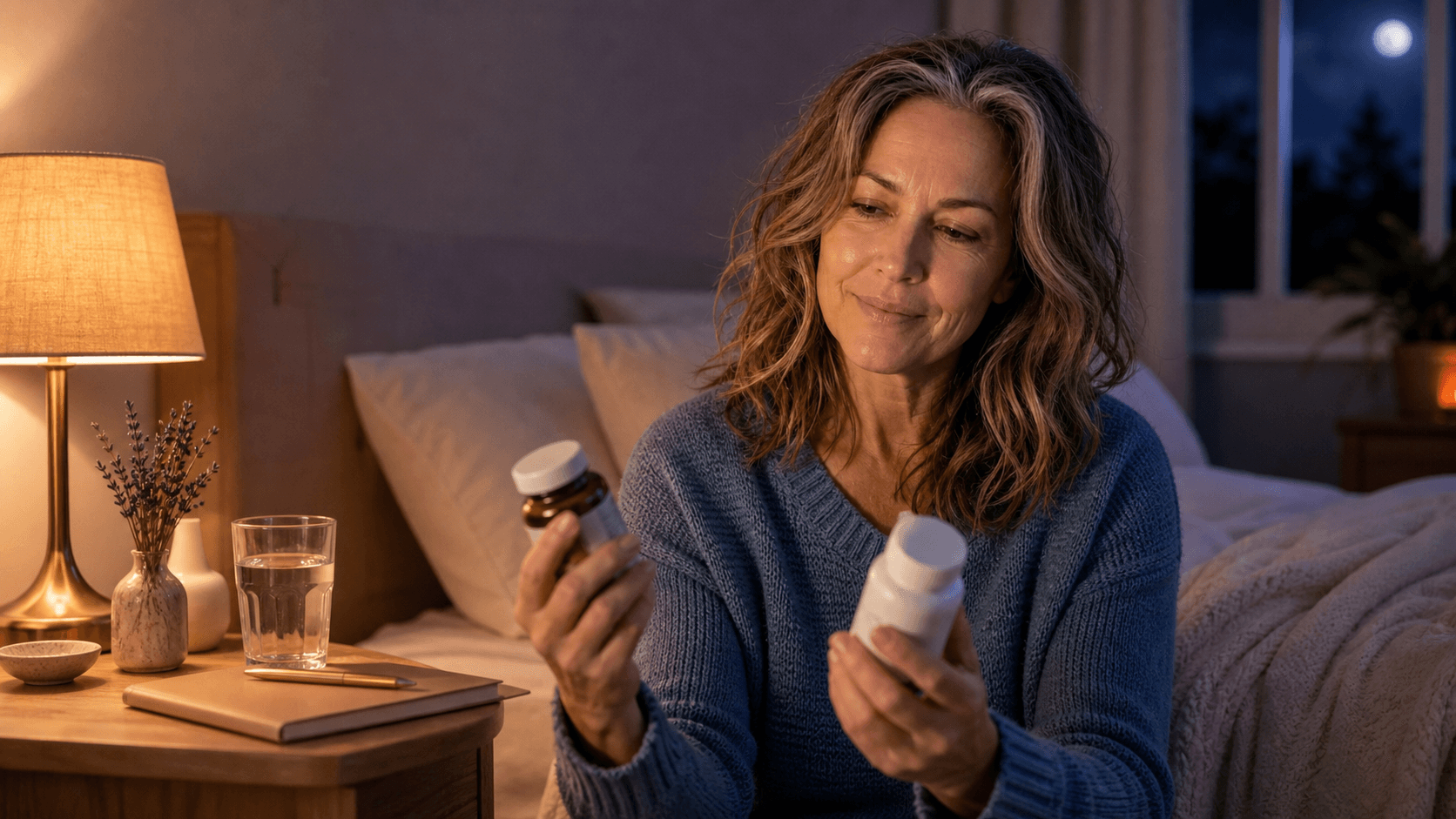
Magnesium for Sleep: Which Type Actually Works (And Which Wastes Your Money)
I stood in the supplement aisle with two magnesium bottles in my hand, both promising better sleep. A sleep doctor later told me the form matters more than the dose — here's the one that actually changed my nights.
Note: This is my personal experience, not medical advice. Talk to a qualified professional before starting any supplement, especially if you take medication, are pregnant, or have a diagnosed condition.