Foods to Eat (and Avoid) in the 3 Hours Before Bed

By Olivia
Jul 14, 20264 min read
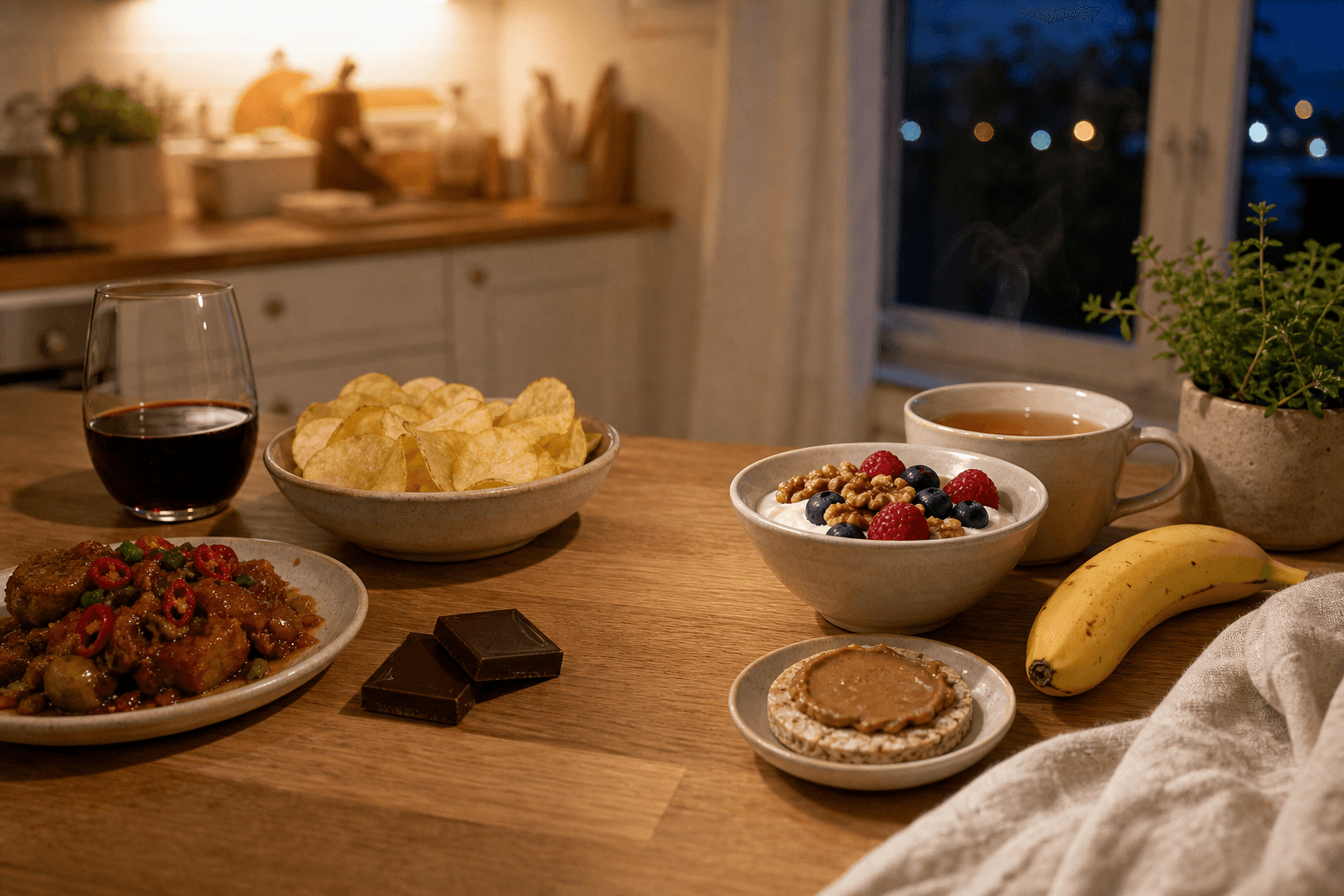
I used to treat the evening as a free-for-all: dinner at 8, something spicy if I was lucky, a glass of wine at 9, a square or three of dark chocolate on the couch. Then I'd wake at 3 AM, warm and restless, and blame my mattress.
A nutritionist friend connected the dots over one dinner at my place. 'Your nights aren't random,' she said. 'They're your last three hours, on replay.' She didn't put me on a diet. She gave me a short list of what to move earlier and what to keep close to bedtime. The 3 AM waking faded within two weeks.
What you'll get from this:
- The 4 foods and drinks that quietly fragment your night
- The 2 things worth eating close to bedtime (yes, eating)
- The 3-hour timing rule that makes the rest forgiving
Digestion, core temperature and blood sugar all talk to your sleep. Research suggests late heavy meals and evening alcohol are two of the most consistent food-related predictors of fragmented sleep, while a small balanced snack can actually protect the second half of the night.
Not sure whether food, habits or hormones are driving your wake-ups? The quiz points you to your main lever first.
Find your sleep type — free 60-sec quizWhy your dinner shows up at 3 AM
Three mechanisms do most of the damage. A heavy or spicy meal keeps digestion running and your core temperature up, exactly what your body is trying to lower to reach deep sleep. Alcohol sedates you early, then fragments the back half of the night as it clears. And a blood sugar dip in the small hours can nudge stress hormones up just enough to surface you.
The friendly part of her advice: you don't have to give anything up. You mostly have to move it. The same meal at noon is harmless. The 3-hour window before bed is the only part that needs managing.
The last-3-hours list
Four to move earlier, two to keep close to bedtime.
Avoid: the heavy, greasy dinner
Why: Digestion keeps your body working and warm for hours, and lying down invites reflux on top.
How: Big or rich meals at least 3 hours before bed. If dinner runs late, I make it deliberately lighter.
Avoid: spicy food at night
Why: Spice raises core temperature and doubles the reflux risk once you're horizontal.
How: I still eat it, at lunch. Evening curries got milder and my nights got quieter.
Avoid: evening chocolate and sneaky caffeine
Why: Dark chocolate, cola and 'decaf-ish' drinks carry enough stimulants to linger into the night.
How: My caffeine cutoff is early afternoon. The chocolate square moved to after lunch, where I enjoy it more anyway.
Avoid: the wind-down glass of wine
Why: It feels like it helps you fall asleep, then quietly fragments everything after about 2 AM.
How: Three-hour cutoff, same as food. On most nights the wine glass now holds sparkling water and tart cherry juice.
Eat: a small carb-plus-protein snack if hungry
Why: Going to bed hungry sets up the blood sugar dip that can wake you in the small hours.
How: Greek yogurt with honey, or half a banana with peanut butter, about an hour before bed.
Eat (well, sip): a warm caffeine-free ritual
Why: A small warm drink signals the wind-down without the middle-of-the-night bathroom trip a big glass causes.
How: A small cup of chamomile or rooibos, finished about 45 minutes before lights out.
Want the bedtime food rules on one page?
Get the free Sleep Reset Checklist (PDF), a one-page printable including the evening habits that protect your night. Sent to your inbox, instant download.
The bottom line
You don't need a stricter diet, you need a 3-hour buffer. Move the heavy, the spicy, the caffeinated and the alcoholic earlier, and keep a small snack and a warm cup close to bedtime. Two weeks of that told me more than any tracker.
Free sleep assessment
Is food timing your main sleep lever, or something else?
Take the free 60-second quiz to find your sleep type and what to fix first.
Take the free sleep quizFree · No signup · Results in 60 seconds
Related articles

Healthy Bedtime Snacks That Don't Spike Blood Sugar: 6 Easy Pairings
At 10 PM I was either going to bed hungry or eating crackers straight from the sleeve. A nutritionist friend showed me a calmer middle ground: small snacks that pair fiber-rich carbs with protein or fat.

Foods That Lower Cortisol at Night: My Honest 6-Item List
At 9:30 PM I was searching for a food that could switch cortisol off by bedtime. A nutritionist friend gave me the less glamorous answer: no magic food, but much smarter nighttime choices.
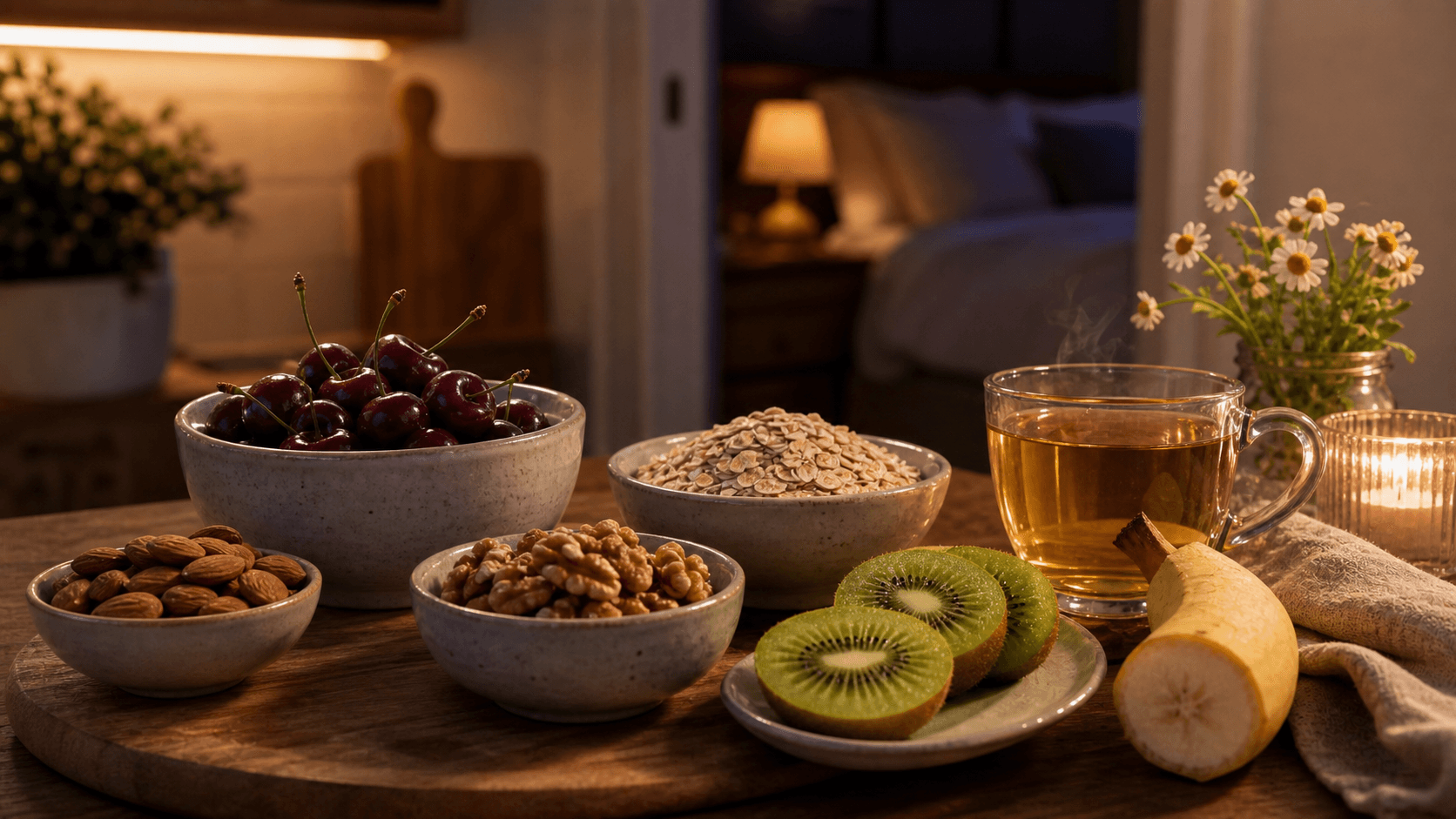
7 Evening Foods That Quietly Helped Me Sleep Better
I was about to buy a shelf of supplements when a nutritionist told me to fix dinner first. These 7 everyday foods nudged my melatonin and steadied my blood sugar — and my nights.
Note: This is my personal experience, not medical advice. Talk to a qualified professional before changing your diet if you have a medical condition or take medication.