Why You Wake Up at 3 AM Every Night (And How I Finally Stopped)

By Olivia
Jun 14, 20264 min read

For about two years, my eyes would open at 3 AM almost to the minute. Not groggy — wired. Heart a little fast, mind already running, the room too quiet. I'd lie there doing the math on how many hours I had left, which of course guaranteed I'd be awake for most of them.
What finally helped wasn't a pill. A sleep specialist I saw explained that my 3 AM wake-up was a signal, not a defect — and once I treated the signal, the waking faded. Here's what was going on, and the five small changes that did the most for me.
What you'll get from this:
- Why 3 AM specifically — the two clocks that collide at night
- The 5 changes that kept me asleep, in plain language
- What to do in the moment when you do wake up
Waking briefly in the night is normal — we all surface between sleep cycles. The problem isn't the waking, it's staying awake. Sleep researchers call the spiral that keeps you up 'conditioned arousal,' and it's learned, which means it can be unlearned.
Why your body picks 3 AM
Not sure which of these is the main driver for you? A quick quiz can point you to your sleep type first.
Find your sleep type — free 60-sec quizTwo systems run your night. One is the sleep pressure that builds all day and gets spent as you sleep. The other is your body clock, which around the middle of the night drops your core temperature and nudges cortisol back up to prepare for morning. When sleep pressure is mostly used up and cortisol is rising, you float closer to the surface — and any little thing wakes you.
The specialist's point that stuck with me: at 3 AM you're not broken, you're light. The goal isn't to knock yourself out harder, it's to stop the things that drag you fully awake.
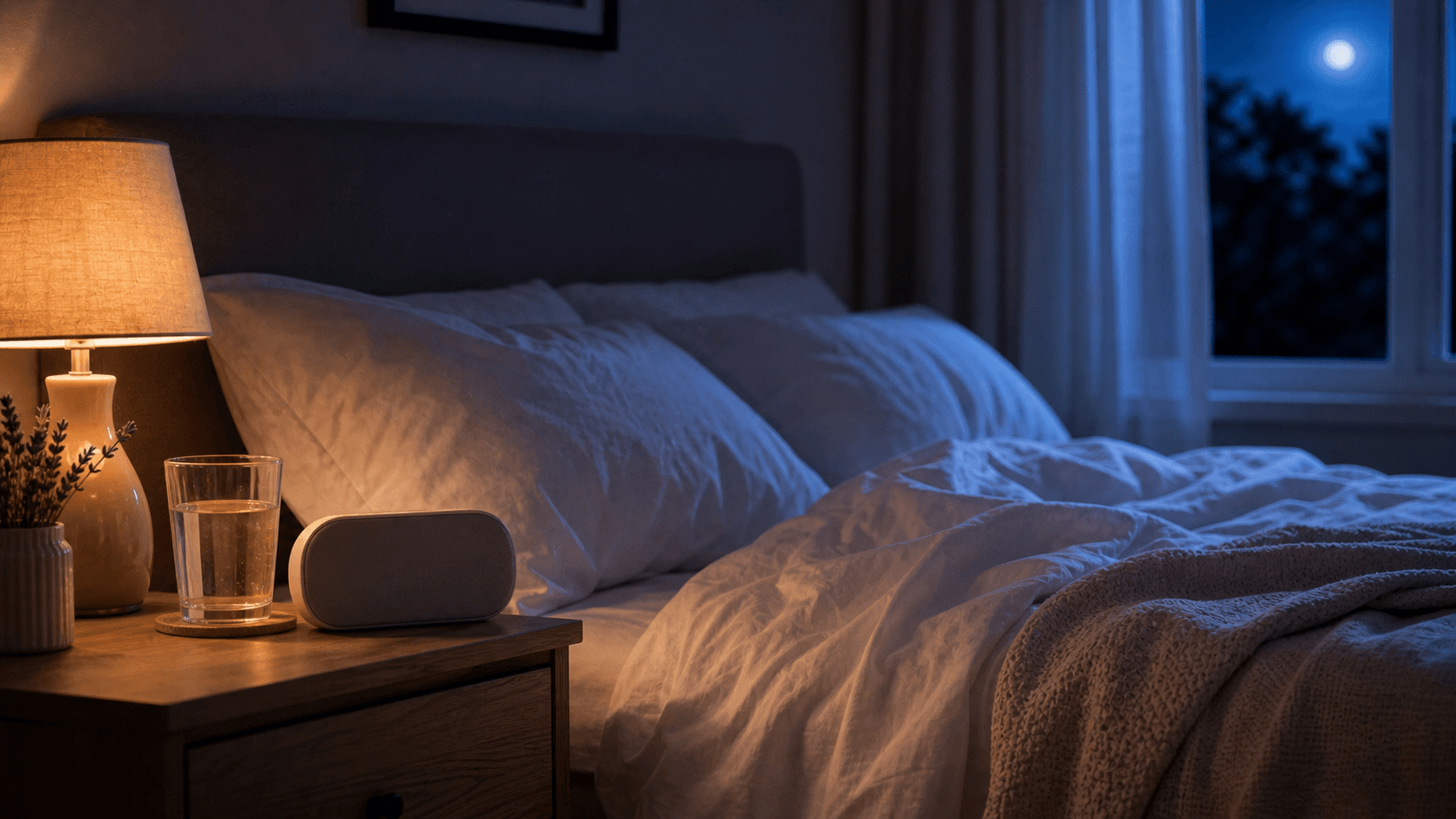
The 5 changes that kept me asleep
Small, boring, and they worked better than anything in a bottle.

Drop the bedroom temperature
Why: Your core temp needs to fall to stay in deep sleep. A warm room keeps you light and wake-prone.
How: I set the room cooler than felt 'cozy' (around 18°C / 65°F) and kept one foot out of the covers.
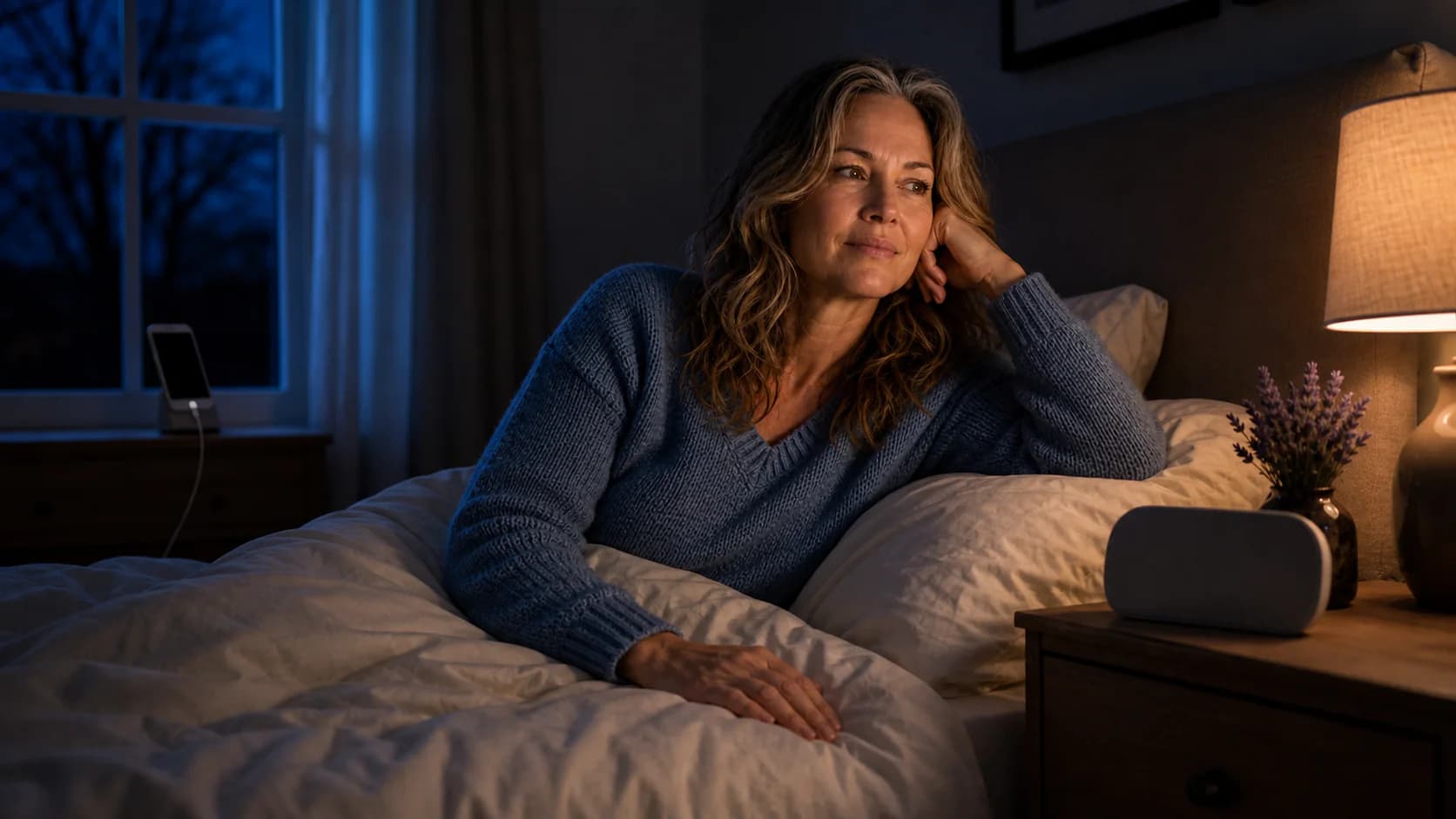
Stop checking the clock
Why: Seeing 3:14 instantly starts the math and the panic — the exact arousal that wakes you fully.
How: I turned the clock to face the wall and put my phone across the room. If I wake, I genuinely don't know the time.

Move the last drink earlier
Why: Alcohol knocks you out, then fragments the back half of the night as it clears — often right around 3 AM.
How: I stopped drinking within three hours of bed. The 3 AM waking dropped off within a week.

Get morning light
Why: Light early in the day anchors your clock so cortisol rises at dawn, not in the middle of the night.
How: Ten minutes outside within an hour of waking — coffee on the step, no sunglasses.

Get out of bed if you're truly awake
Why: Lying there frustrated teaches your brain that bed is a place to be alert.
How: After ~20 minutes I get up, sit somewhere dim and dull, and only return when sleepy. Boredom is the goal.
Want the 3 AM reset on hand?
Get the free Sleep Reset Checklist (PDF) — a one-page printable of the habits in this article. Sent to your inbox, instant download.
The bottom line
The 3 AM wake-up isn't a life sentence. Cool the room, hide the clock, move the last drink earlier, chase morning light, and stop fighting the bed. Give it a real week and let your nights tell you what they think.
Free sleep assessment
Want to know why you wake at night?
Take the free 60-second quiz to find your sleep type and a reset matched to you.
Take the free sleep quizFree · No signup · Results in 60 seconds
Related articles

The 3 AM Cortisol Spike: What's Happening (And How I Finally Stopped It)
For months I'd jolt awake at 3 AM, heart pounding, brain racing — for no reason. A sleep doctor explained the cortisol surge no one had told me about, and the small night habits that finally calmed it.
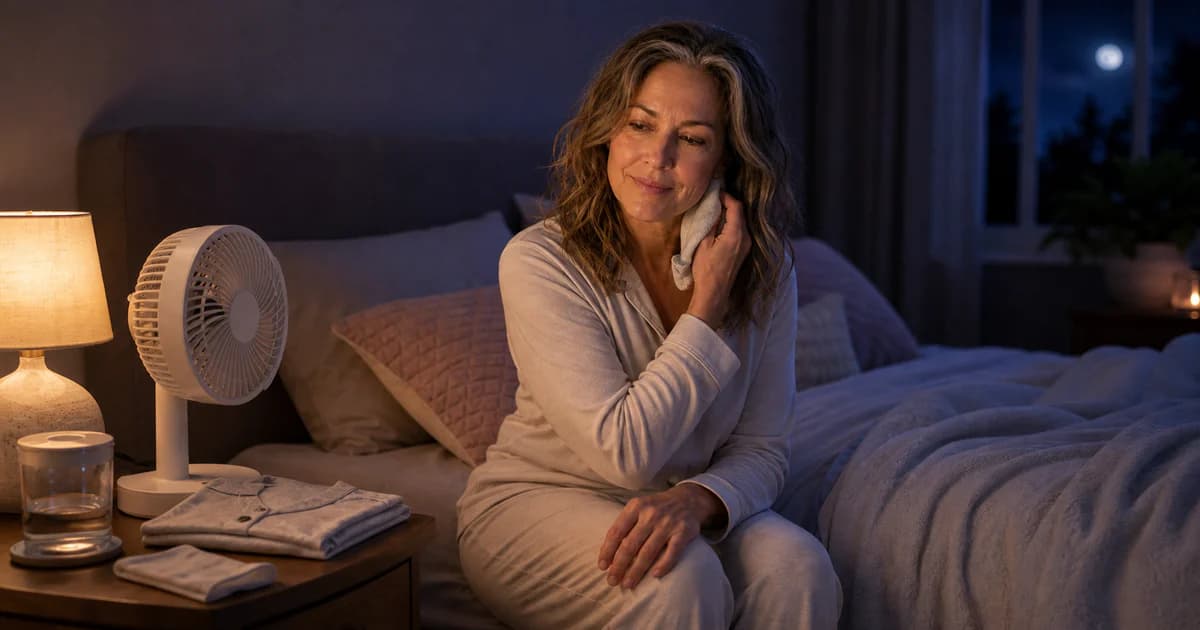
Hot Flash Sleep Tricks: What Actually Cools Me Down
At 2 AM I was throwing off the duvet, then shivering ten minutes later. My doctor helped me build a cooling setup that handles the heat wave and the cold rebound without fully waking me.
Menopause Insomnia: Why Sleep Gets Worse After 45 (And What Helped Me)
The year I turned 46, my sleep changed personality: night sweats at 2 AM, wide awake at 3. My doctor's one-line explanation reframed everything, and these 5 adjustments gave me my nights back.
Note: This is my personal experience, not medical advice. Talk to a qualified professional before changing anything if your sleep problems are severe or ongoing.