The 3 AM Cortisol Spike: What's Happening (And How I Finally Stopped It)

By Olivia
Jun 23, 20264 min read

For a long stretch, I'd wake at 3 AM not just awake — wired. Pounding heart, brain already racing through a worst-case-scenario list I hadn't written. No noise, no nightmare, no full bladder. Just me, suddenly alert at 3 AM, the way you'd be alert if a smoke alarm had gone off.
When I finally saw a sleep doctor, she pulled up a chart on her tablet — a small cortisol spike at exactly the time my body kept jolting awake. 'You're not anxious,' she said. 'Your stress hormone is firing on a broken schedule.' Once I understood what was actually happening, the fix turned out to be quiet, slow, and doable.
What you'll get from this:
- What cortisol actually does at night (in plain English)
- Why it spikes at 3 AM specifically, not 2 or 5
- 5 gentle ways I lowered mine — no pills, no white-knuckle willpower
Cortisol naturally rises in the second half of the night to prepare you for morning. When that rise comes too steep or too early, it shows up as a wide-awake 3 AM wake-up — often with a pounding heart or sudden anxious thoughts. Sleep researchers call this a 'reverse cortisol curve.'
Why your body picks 3 AM (not 2, not 5)
Not sure if cortisol is what's actually waking you, or something else?
Find your sleep type — free 60-sec quizTwo clocks run your night. Sleep pressure builds all day and gets spent as you sleep — by 3 AM, you've already used most of it. At the same time, your body clock is starting to nudge cortisol back up to wake you for the day. When those two lines cross, you're at your most surface-level sleep. Any little thing — a noisy house, a low blood sugar dip, a stress thought — can pull you fully awake.
The doctor's line that stuck with me: at 3 AM you're not sick, you're light. The 5 changes below don't push you back into deep sleep — they remove the things that are yanking you out of it.
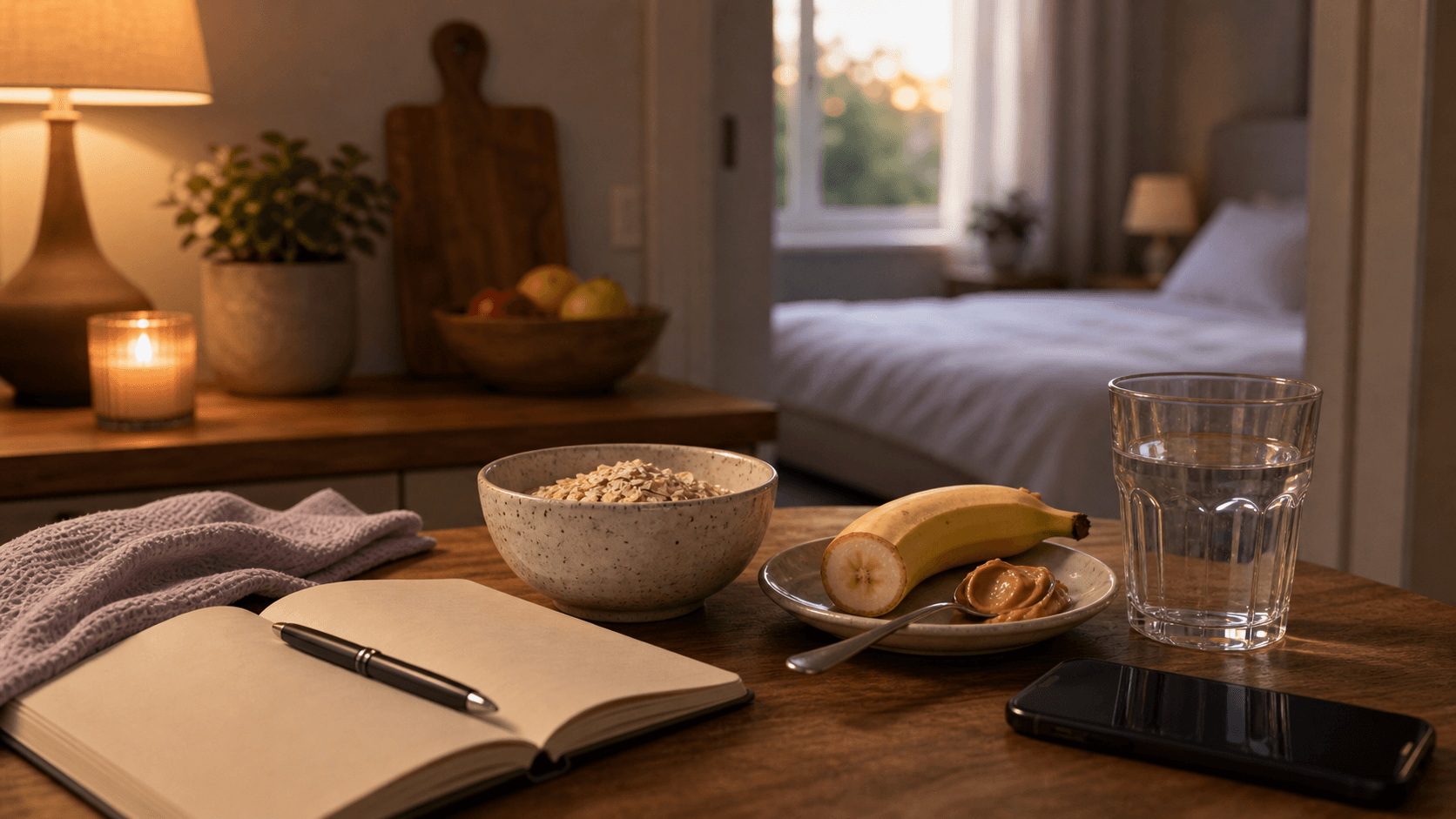
5 gentle ways I lowered my 3 AM cortisol
Small evening shifts, repeated nightly. The third one surprised me.
A small carby snack before bed
Why: Low overnight blood sugar is one of the biggest cortisol triggers — your body wakes you to 'go find food.'
How: A small bowl of oats or half a banana with a teaspoon of nut butter, 60-90 minutes before lights-out.
No alcohol within 3 hours of bed
Why: Alcohol knocks you out, then jolts your cortisol up as it clears — usually right around 2-4 AM.
How: Move the last drink earlier. I noticed the 3 AM waking soften within a week.
A bedside brain dump
Why: Unfinished thoughts mean your nervous system stays low-grade alert. Writing them down closes the loop.
How: 2 minutes, paper notebook by the bed. Tomorrow's top three things plus anything nagging me.
Morning light, 10 minutes
Why: Bright light early in the day anchors cortisol to rise at 7, not 3. Without it, the timing drifts.
How: Coffee on the doorstep, no sunglasses, within an hour of waking. Cloudy days count.
Long-exhale breathing if I wake up
Why: Slow exhales pull your nervous system out of fight-or-flight before the thought spiral starts.
How: In for 4, out for 8, for a few minutes. No counting reps, no checking the clock.
Want the 3 AM reset on hand?
Get the free Sleep Reset Checklist (PDF) — the evening habits I lean on for calmer nights, on one printable page. Sent to your inbox, instant download.
The bottom line
Your 3 AM wake-up isn't proof you're broken — it's a cortisol curve that has drifted off schedule. Anchor your light, steady your blood sugar, empty your head before bed, and give it a real week. Let your nights tell you what they think.
Free sleep assessment
Is cortisol what's waking you, or something else entirely?
Take the free 60-second quiz to find your sleep type and what to fix first.
Take the free sleep quizFree · No signup · Results in 60 seconds
Related articles

Why You Wake Up at 3 AM Every Night (And How I Finally Stopped)
For two years I snapped awake at 3 AM, wide-eyed and wired. A sleep specialist explained what my body was actually doing — and the 5 small changes that kept me asleep until morning.

The Cortisol-Friendly Evening Plate: How I Build Dinner for Calmer Nights
I spent a year reading about cortisol and sleep, then eating a dinner that ignored all of it. Building the plate itself, rather than hunting single magic foods, is what finally steadied my evenings.

The 20-Minute Rule: What I Do When I Can't Fall Back Asleep
At 2:17 AM I would stay in bed trying harder and getting angrier. My CBT-I therapist taught me a rule that sounded backward: leave the bed before wakefulness becomes its new job.
Note: This is my personal experience, not medical advice. Talk to a qualified professional before changing anything if you're on cortisol-affecting medication or have a diagnosed sleep disorder.